My great-grandad was a machinist in Danville, VA. He passed a few years ago, and my great-grandma just last year. It was special to grow up having great-grandparents in my life, and I have so many memories of times spent in their home with family.
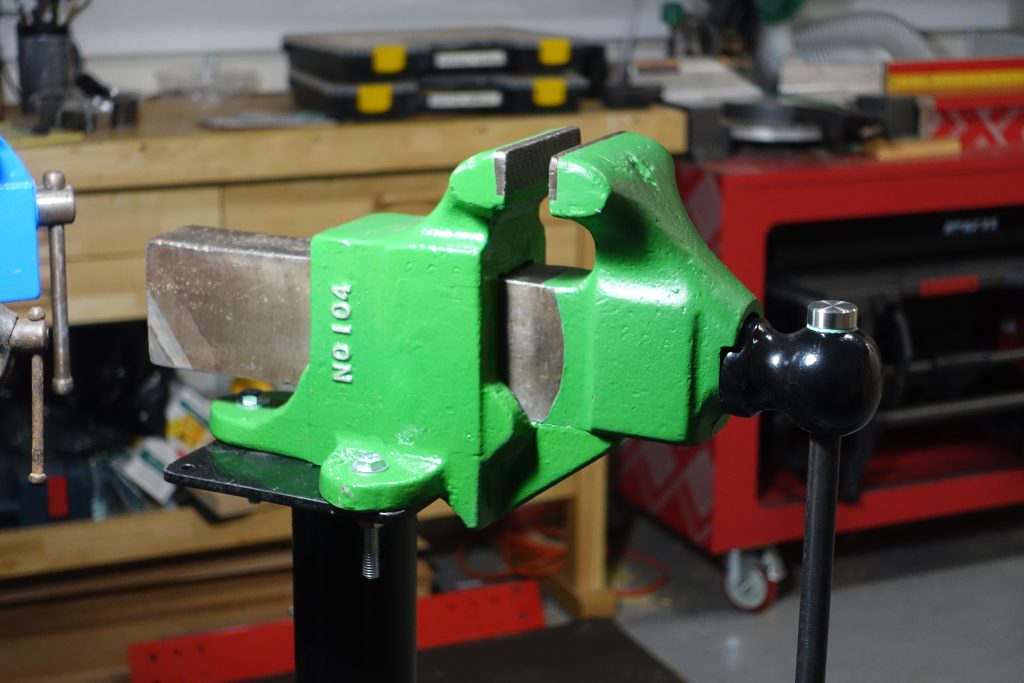
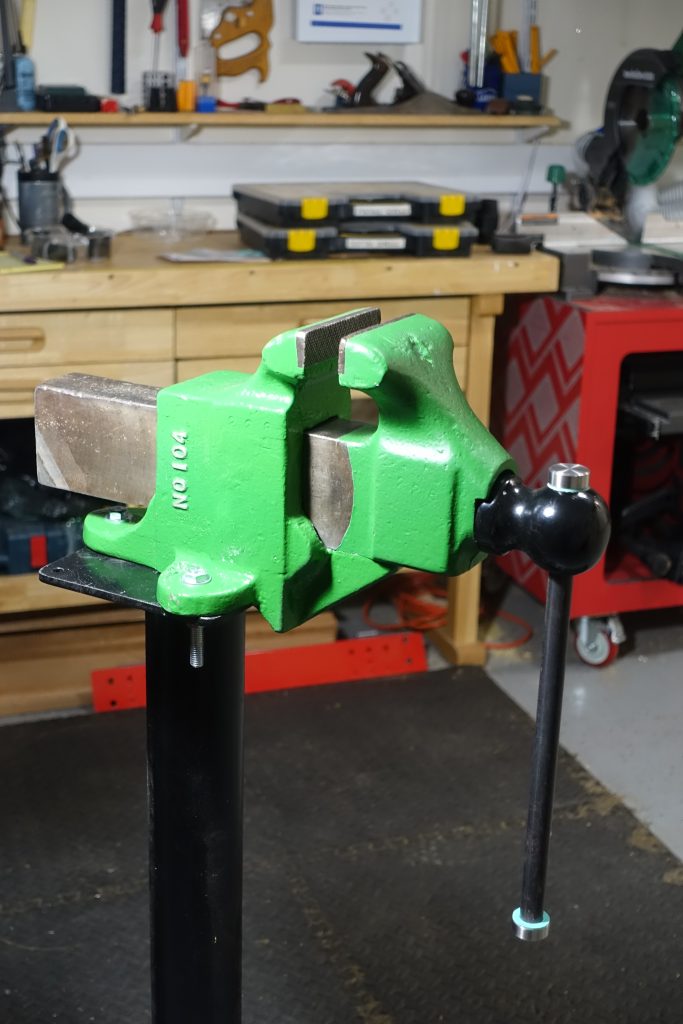
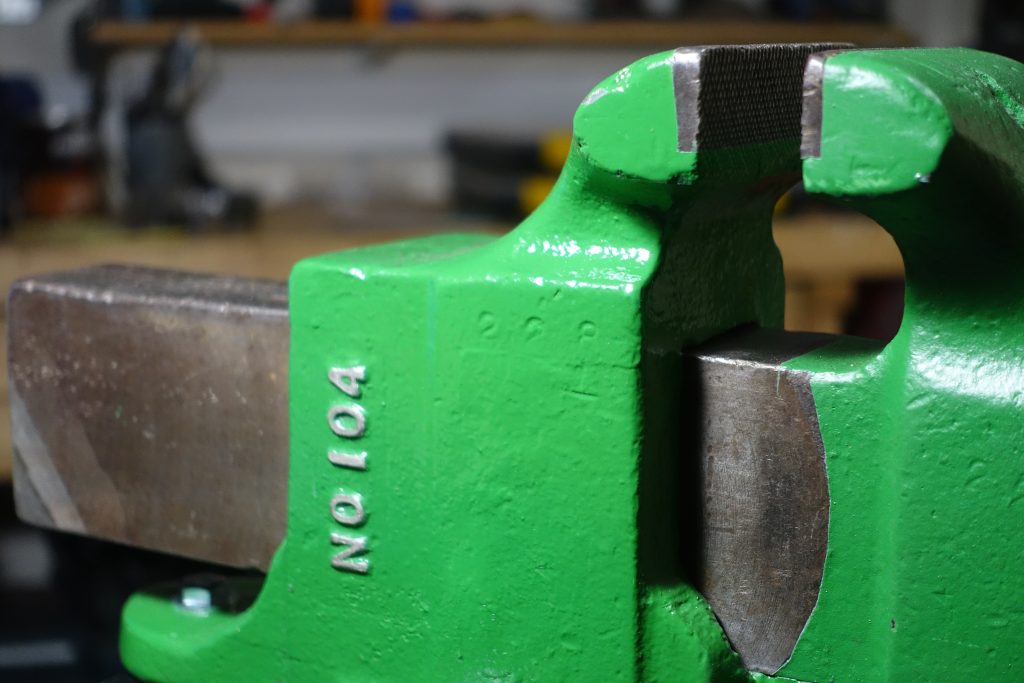
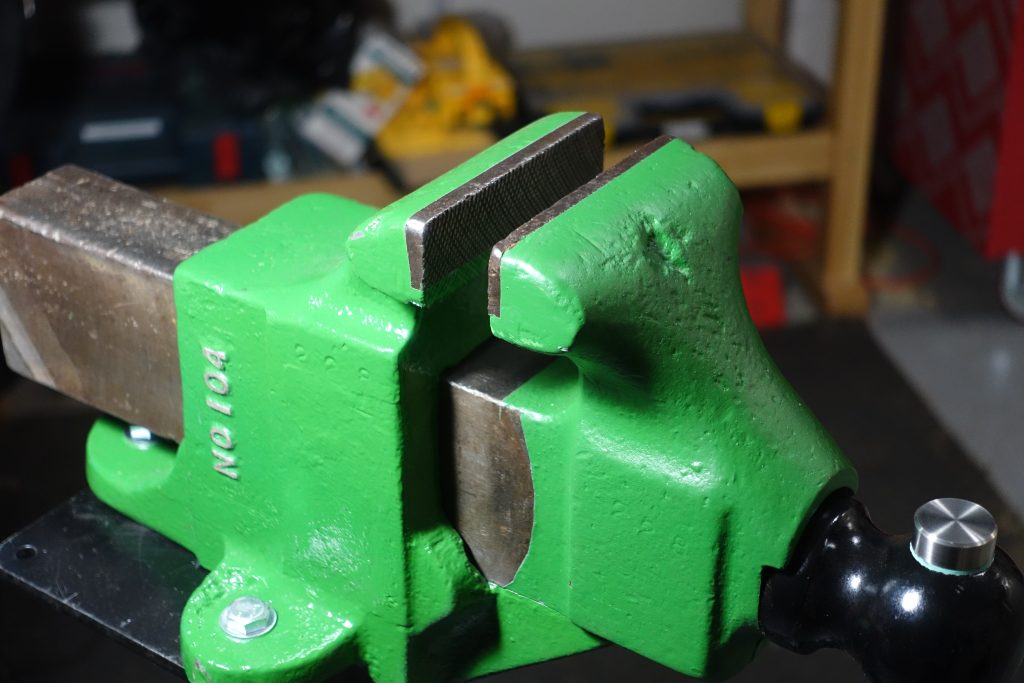
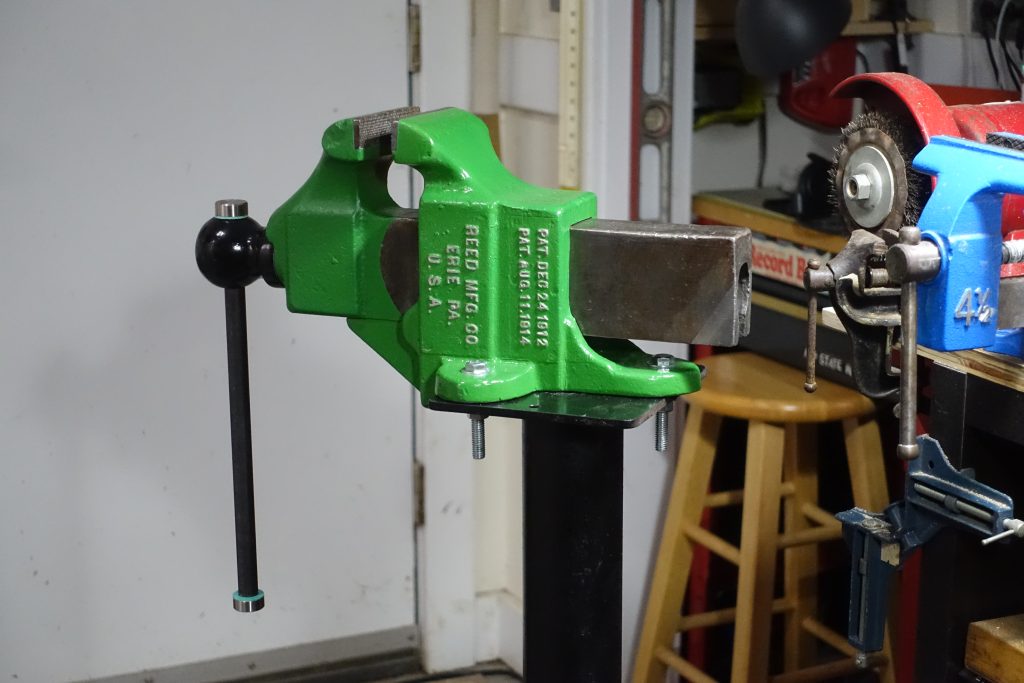
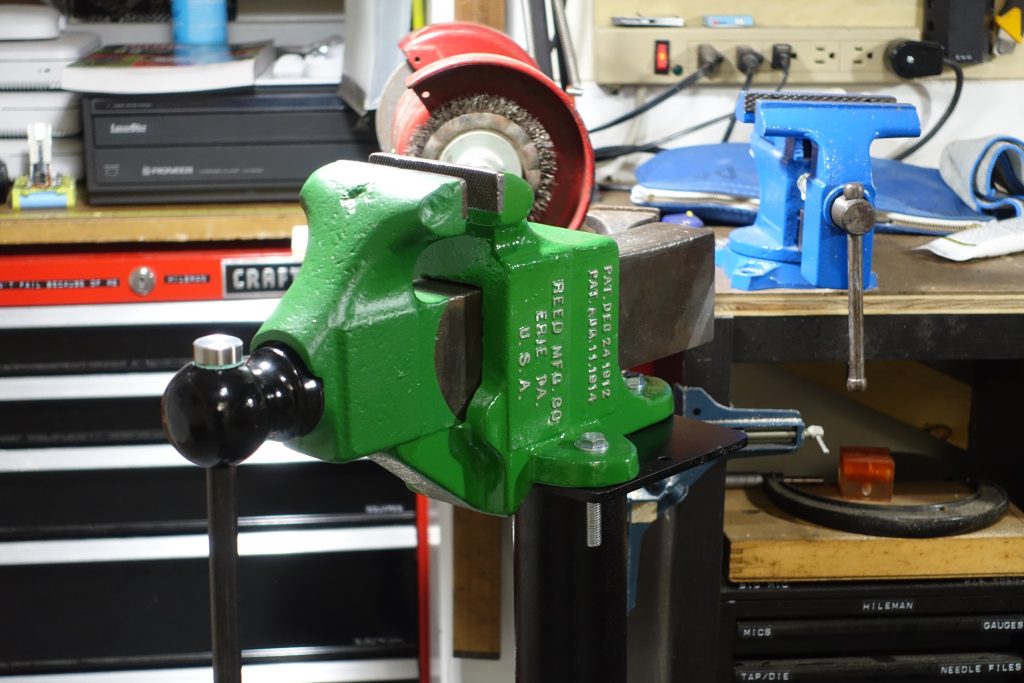
I was given this Reed No. 104 bench vise from my great-grandads shed. It had some pitting and was covered in debris, but the layers of dirt and grease had kept it in pretty good condition. Over the course of a few evenings spread across a few months, I disassembled it, cleaned it, painted it, and set up a pedestal stand for it, since I didn’t have a good spot open on my workbenches.
The handle was bent and in rough condition. I cut it off and fashioned a new one from a piece of 5/8″ 1144 steel, which has a high yield strength. I machined the ends flat on the lathe and drilled and tapped a 5/16-18 hole on each end where I installed stainless steel standoff caps. I ordered some buna-n washers to soften the impact of the handle sliding into the screw. These are not as soft as I expected so I may do something different in the future.
The stand I had had a large dent in the base, so it didn’t sit flat. I leveled it, then traced around the bottom to create a flat reference line. I used an angle grinder to reduce the high spots, and it is a lot more stable now.
I discovered a date stamp from February 1928, when my great-grandad was only 2 months old, so this goes back even further in the family than I initially thought.
The vise weighs in at 42.3 pounds! It is extremely rigid due to its over-engineered design. I opted not to fill the pits and imperfections in the metal to tell the story of its age and use.
When my great-grandad passed, I had just started gaining an interest in making things and learning to use machine tools. Although we never made this connection together, I know that it is an ability we share.
I hope that this vise will easily last another 97 years and 3+ more generations.